



Maxed out credit card, loans that accumulate and accounts no longer fit the budget. For many, this reality has become part of everyday life. In January of this year, 79.5% of Brazilian households declared to have some type of debt, according to the Survey of Indebtedness and Consumer Default, of the National Confederation of the Commerce of Goods, Services and Tourism (CNC).
In the state of Tocantins, the data also trigger an alert. Information from SPC (Credit Protection Service) Brazil indicates a 10% increase in defaults between 2022 and 2023. In the city of Palmas, a survey by the Chamber of Shop Managers (CDL) shows a 12% growth in the number of defaults over the same period, followed by a light decline of 3% between 2023 and 2024.
In the Consumer Week, which marks the March 15th, the Judiciary of the state of Tocantins broadens the view on this reality and reinforces a role that goes beyond conflict resolution. The action involves guidance, prevention and construction of paths for the citizen to recover financial balance and dignity. In the city of Palmas, this support is realized through the Progam on Cejusc Renegotiate.
Developed by the Judicial Centers for Conflict Resolution and Citizenship (Cejusc) Ulbra, the program focuses on building consensual solutions between consumers and creditors, combining financial education and debt reorganization in a responsible and sustainable way.
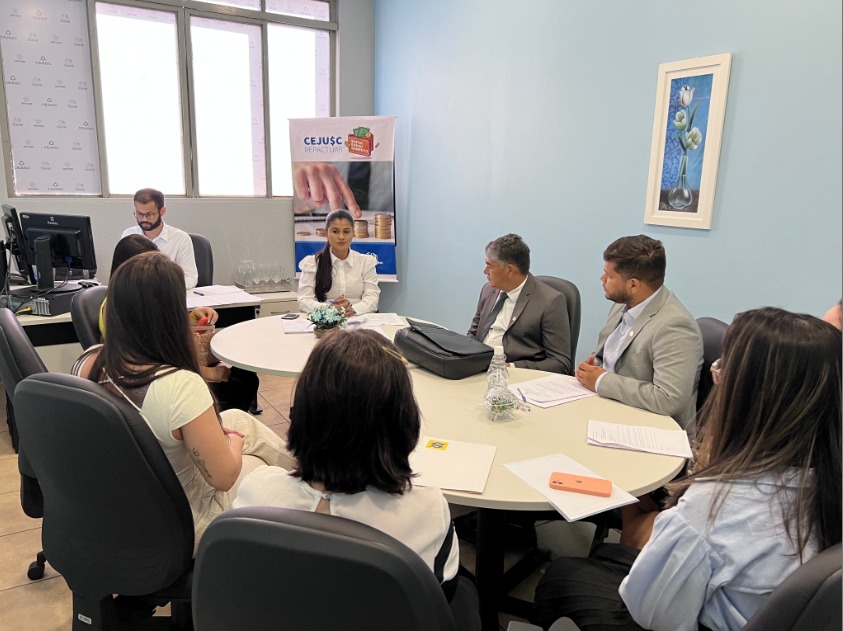
The differential is in the form of action. Instead of isolated negotiations, the program brings together all the creditors in a single audience, which allows for the construction of a more realistic and balanced payment plan. The proposal transforms consumer reception into effective public policy.
The procedure takes place in two steps. The first consists of the conciliatory phase, with initial assistance, financial guidance and an attempt at a collective agreement. If there is no consensus, the situation follows for judicial review, which can establish a mandatory payment schedule.
The whole process is based on three essential pillars: preservation of the existential minimum, payment term of up to five years and balance between the parties.
In addition to the renegotiation of debts, the program also acts in prevention. The course on "My Accounts Up to Date", held in partnership with the Superior School of the Judges of the State of Tocantins (Esmat), has already impacted dozens of consumers in the city of Palmas.
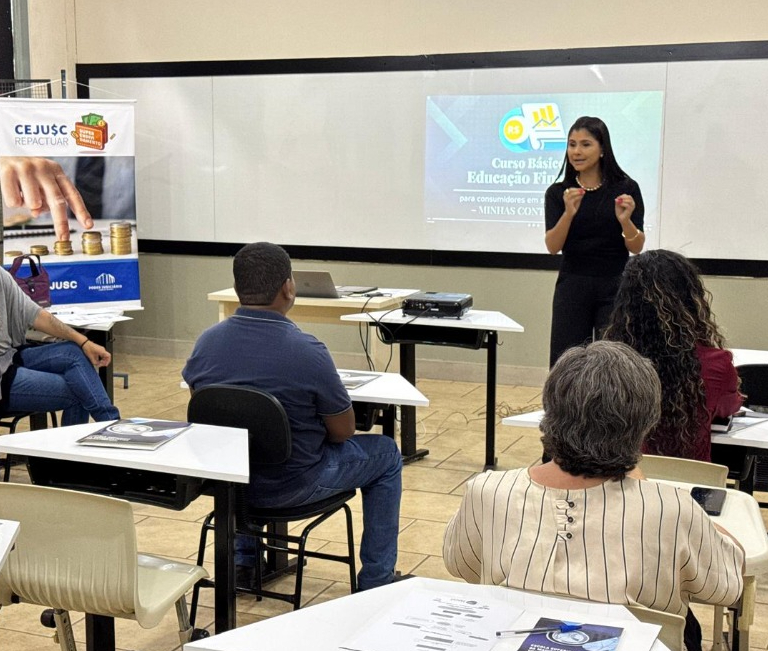
Between 2025 and 2026, the course has already reached 170 students, which demonstrates the growing demand for financial guidance.
The work also includes holding reconciliation hearings and care aimed at the over indebtedness. In 2025, the Cejusc Ulbra held 220 hearings and, in 2026, it already counted 26, in addition to various pre-procedural services, strengthening access to Justice in a practical and humanized way.
Restart
The story of "Carlos" (fictional name) translates what the numbers do not show. For years, he resorted to credit as an alternative to deal with unforeseen events. Every time he took out a new loan. With each breath, the card limit is again compromised. Little by little, the accounts no longer fit in the budget, and what seemed a solution became a growing and silent problem.
With available consignable margin, he used the credit whenever he needed. At the same time, he kept his card on the edge until he realized that he could no longer organize his financial life without compromising the basics.
The change began with information. By learning about the Law 14.181 of 2021, known as the Law of Over Indebtedness, he gained access to a new path. The legislation updated the Consumer Protection Code and went on to protect people who, in good faith, cannot pay their debts without compromising essential expenses.
After a detailed analysis of his situation, the case went to Cejusc Ulbra, where he started a structured process of financial reorganization.
Carlos participated in the course on "My Accounts Up to Date", a fundamental step to understand, in practice, how to reorganize the budget and avoid new debts. He then received guidance from a financial educator, who assisted him in building a payment plan compatible with his reality.
With the plan defined, he participated in the conciliation hearing with the creditors. He reached an agreement with part of them. For the other debts, especially with banking institutions, the case went to court decision.
The decision ensured adoption of the plan presented, with fairer conditions and appropriate to its financial capacity. The result brought relief, as it reduced approximately R$270,000 in the total value of the debts.
For Carlos, the impact goes beyond numbers. It represents the possibility of a chance to get out of a tight spot, planning again for the future and regaining dignity. Stories like this reveal that, behind the statistics, there are people seeking a new beginning. And they show that when there is guidance, structure, and access to Justice, a fresh start becomes possible.
Reception and transformation
For the coordinating judge of Cejusc, Umbelina Lopes Pereira Rodrigues, the treatment of the overindebted consumer represents one of the most significant advances in the consumer law in recent years, "recognizing that excessive indebtedness is not limited to a financial issue, but also constitutes a social problem that directly impacts the dignity of the human person".
According to the judge, the program provides for collective hearings of debt renegotiation, with the participation of all creditors, which allows the construction of a structured plan, viable for the consumer, with preservation of the existential minimum and, at the same time, satisfaction of the creditor.
“More than resolving conflicts, the project seeks to restore to the consumer the possibility of starting over, with dignity and financial autonomy. Dealing with over-indebtedness is, first of all, restoring dignity to the consumer and ensuring real conditions for him or her to rewrite their own financial history", emphasizes Judge Umbelina Lopes.
Structure
Cejusc Ulbra has a civil server, legal advisor of the 2nd Criminal and Executions Court of the County of Porto Nacional, of which the coordinating judge is the titular, who assists in the activities of the Center. Academics of the Law course who act as volunteers, according to a predefined scale.
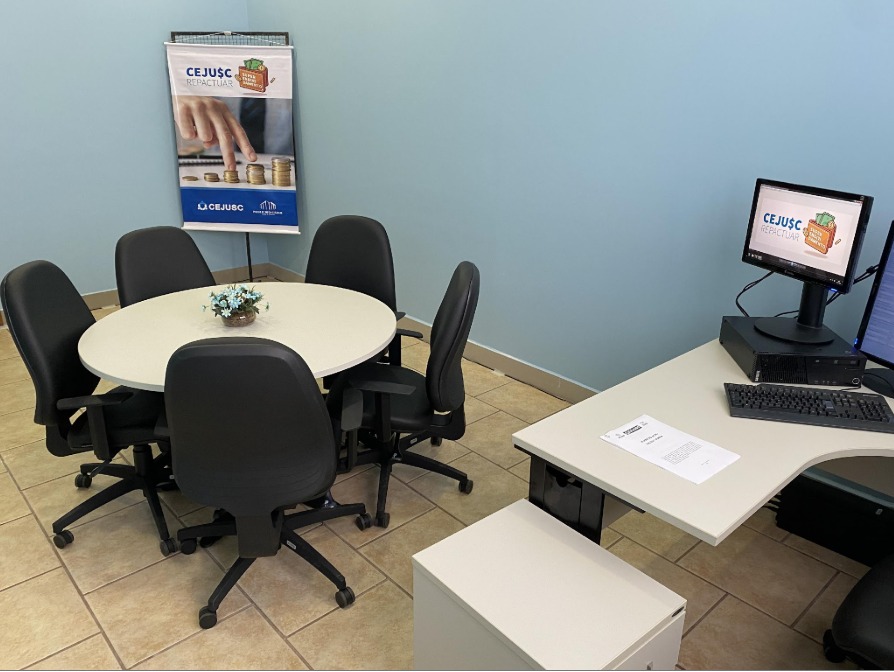
How to seek service at Cejusc Ulbra
Those interested in seeking help can find Cejusc Ulbra by email at
